

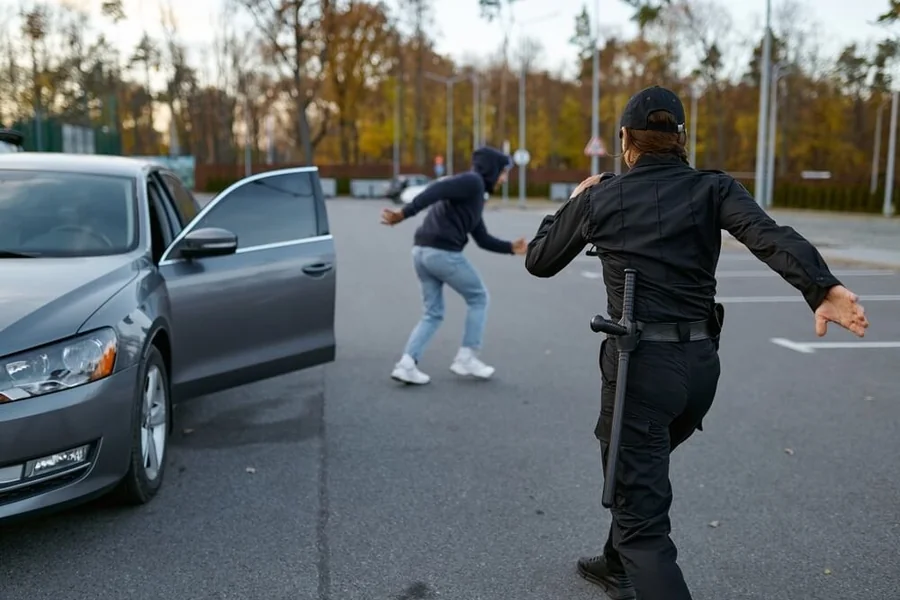
Panic sets in the moment you realize what happened. You left the accident scene without stopping. Now, you’re asking yourself almost all in one breath: “I committed a hit and run how long will it take for the police to find me?”
There’s no single answer. The timeline depends on multiple factors, as this article breaks down.
Here’s why it’s crucial that you know what affects hit-and-run investigation timelines in Missouri and what you should expect if you leave the scene of an accident.
Hit and Run Laws in Missouri
Missouri law requires drivers involved in an accident to stop at the scene and provide information. Under Missouri Revised Statutes Section 577.060, leaving the scene of an accident is a serious criminal offense with significant consequences.
A hit-and-run in Missouri occurs when a driver involved in a collision fails to stop and exchange information as required by law.
The legal consequences depend on whether the accident resulted in property damage only or involved personal injury or death.
Missouri requires drivers to:
- Stop immediately at the scene of an accident
- Provide name, address, and vehicle registration number
- Show their driver’s license upon request
- Render reasonable assistance to injured persons
- Notify the police if the accident involves injury or death
Drivers must fulfill these obligations regardless of who caused the accident. Even if you believe the other party was at fault, you cannot legally leave the scene.
What Determines How Fast Police Track You Down
-
Severity of the Hit and Run Accident
Missouri law treats hit and run offenses differently based on what happened at the scene. The level of harm directly affects investigation speed and priority.
Felony cases (involving injury or death):
- Qualify as felony charges
- Receive immediate attention from law enforcement
- Trigger assignment of multiple detectives
- Include forensic evidence processing
- Often involve public appeals for information
Misdemeanor cases (property damage only):
- Fall into a lower priority status when no injuries occur
- Get charged under different statutes
- May take longer to investigate due to resource allocation
- Compete with more serious cases for investigator attention
Fatal collisions and accidents involving injury trigger the most intensive investigations.
Furthermore, property damage cases may sit in a queue behind injury cases that demand more urgent attention.
-
Evidence Available from the Scene
Strong evidence dramatically shortens investigation timelines. A clear license plate number gives investigators an immediate lead. Although partial plate information still helps narrow the search to specific vehicle makes and models.
Evidence that speeds up investigations:
- Surveillance footage from nearby businesses or residences
- Dashboard camera recordings from other drivers
- Witness statements describing the vehicle or the hit-and-run driver
- Physical evidence, like paint transfer or vehicle parts left at the accident scene
- Cell phone videos captured by bystanders
Modern technology has changed how police investigate hit-and-run cases.
The police report filed by victims of hit and run or witnesses serves as the foundation for the investigation. Detailed reports with specific vehicle descriptions help investigators focus their search.
-
Available Police Resources
Police resources affect investigation speed significantly. How departments allocate staff and funding determines how quickly they can pursue hit and run cases.
Larger jurisdictions:
- Maintain dedicated units trained specifically for hit and run investigations
- Process evidence faster with specialized equipment
- Follow leads more aggressively with dedicated personnel
- Can assign multiple investigators to serious cases
Smaller departments:
- Assign hit and run investigations to officers handling multiple case types
- Face limited staffing that slows investigation timelines
- Must balance hit and run cases alongside burglaries, assaults, and other crimes
- May lack specialized training or equipment
The circumstances of the accident influence how police allocate resources. An accident in Missouri involving a pedestrian or cyclist generates more investigative pressure than a parking lot collision between two vehicles.
The Hit and Run Investigation Process
Police begin investigating the moment they receive notification. Officers visit the scene of an accident to document evidence, photograph damage, and interview witnesses.
This initial response happens quickly for serious cases.
Standard investigation steps:
- Processing the accident scene for physical evidence
- Reviewing nearby surveillance footage from businesses and residences
- Running license plate searches through state databases
- Interviewing witnesses and victims of hit and run accidents
- Tracking down potential suspects based on vehicle descriptions
- Gathering vehicle registration information from the responsible party
The investigation timeline can take anywhere from days to several months, depending on available evidence and case complexity.
How long investigations typically take:
- Simple cases with clear evidence: May resolve within 48 hours
- Complex cases without witnesses or video: Can stretch across several months
- Cases with partial information: Take hours or days as investigators follow leads
Once investigators identify potential suspects, they take direct action to verify vehicle involvement.
What happens during the investigation:
- Officers visit registered vehicle owners at home or work
- Inspectors examine vehicles for damage matching the collision
- Police look for paint transfer, dents, or broken parts
- Multiple vehicle owners may receive police contact during one hit and run investigation
Note: Investigators use vehicle registration databases to match license plate information with owners.
When witnesses provide even partial plate numbers, police can narrow their search to vehicles matching that description registered in the area.
Legal Consequences of Leaving the Scene in Missouri
Missouri law imposes severe penalties for hit and run offenses. The severity of the charges depends on whether the accident involved property damage only or personal injury.
-
Misdemeanor Hit and Run (Property Damage Only)
When someone flees the scene after causing only property damage, Missouri classifies this as a Class A misdemeanor.
Potential misdemeanor penalties:
- Up to one year in jail
- Fine up to $2,000
- Points on your driver’s license
- License suspension
- Increased insurance rates
- Criminal record
-
Felony Hit and Run (Involving Injury or Death)
Felony Hit and Run (Involving Injury or Death)
When a hit-and-run accident in Missouri causes serious harm, the penalties become much more severe. The exact charge depends on what happened at the scene.
If the accident caused:
- Injury or property damage over $1,000: It’s a Class E felony, punishable by up to 4 years in prison and fines.
- Note: Class E is the lowest felony level in Missouri
- Death: It’s a Class D felony, punishable by up to 7 years in prison and fines
- A prior conviction under §577.060: The new offense is also treated as a felony, even if the current case would otherwise be a misdemeanor
Leaving the scene of a serious accident doesn’t just risk harsher punishment. It also creates a permanent mark on your criminal record that can follow you long after the case ends.
Potential felony penalties:
- Up to four years in prison for leaving an accident with injury
- Up to seven years for leaving an accident with serious bodily injury
- Up to 15 years for leaving an accident resulting in death
- Substantial fines
- Driver’s license revocation
- Permanent felony criminal record
-
Additional Criminal Charges
Hit and run cases rarely stand alone. Additional charges often accompany the primary offense.
Common additional charges:
- DUI charges if alcohol or drugs were involved
- Reckless driving based on how the accident occurred
- Careless and imprudent driving under Missouri traffic laws
- Obstruction charges if you lied to investigators or destroyed evidence
A criminal record from a hit-and-run conviction creates long-term problems. Employment applications, professional licenses, and housing applications all require disclosure of felony convictions.
Should You Come Forward or Wait for Police Contact?
Drivers who fled the scene face a difficult choice. Each option carries risks and potential consequences.
Benefits of Voluntary Surrender
Coming forward voluntarily may influence how prosecutors handle your hit-and-run case:
- Demonstrates cooperation and willingness to take responsibility
- Prosecutors sometimes consider this when deciding charges
- Courts may view voluntary surrender more favorably than waiting
- Shows you didn’t attempt to hide evidence or flee Missouri
Risks of Waiting for Police to Find You
Waiting increases the likelihood of harsher treatment from both prosecutors and judges:
- Appears you hoped to avoid responsibility entirely
- Additional charges may pile up if you took steps to conceal involvement
- Prosecutors view this less favorably during plea negotiations
- More time allows investigators to build a stronger case against you
Coming forward doesn’t mean going alone. Speaking with an attorney before contacting police protects your rights throughout the legal process.
Remember that the circumstances of your accident matter enormously.
Time Doesn’t Stop the Investigation
Hit and run investigations don’t have expiration dates. Police may contact you months after a collision if new evidence surfaces connecting you to the accident scene.
Investigations continue even when weeks pass without initial contact:
- Witnesses come forward later with vehicle descriptions or license plate numbers
- Surveillance footage gets reviewed during unrelated investigations
- Vehicle damage noticed during routine traffic stops raises questions
- Database searches connect evidence to registered owners
- Insurance companies report suspicious claims for car repairs
Statute of Limitations in Missouri
Missouri law gives prosecutors specific timeframes to file charges after a hit and run incident:
- Five years for felony hit and run cases involving injury or death
- One year for misdemeanor hit and run cases with property damage only
Law enforcement can investigate throughout that entire period. Some drivers assume they’re safe after weeks pass without police contact. That assumption proves false when investigators finally connect evidence to a specific vehicle or driver.
Technology Improves Detection Rates
Technology continues improving police ability to track hit-and-run drivers:
- License plate readers capture thousands of vehicles daily across Missouri
- Expanded surveillance networks cover more commercial and residential areas
- Database integration connects evidence across jurisdictions
- Digital forensics recover deleted data from phones and computers
Cases that might have gone cold years ago now get solved through digital evidence. It’s impossible to know when police will make the connection, but investigators have more tools than ever before.
What Injured Victims Can Do
If you were injured in a hit-and-run accident in Missouri, you have options for seeking justice and compensation even when police haven’t found the at-fault party.
Steps Victims Should Take
Taking immediate action protects your rights and strengthens any future claim:
- Call 911 immediately for medical help and police response
- Document the accident scene with photos if physically able
- Collect witness statements and contact information
- Note any vehicle details you remember
- File a police report as soon as possible
- Seek medical treatment even if injuries seem minor
Insurance Options for Victims
Missouri car accident victims have several insurance options when the responsible party flees:
Finally, uninsured motorist coverage may provide compensation when the at-fault driver cannot be identified or located. This coverage helps pay for:
- Medical bills from your injuries
- Lost wages during recovery
- Pain and suffering
- Car repairs or replacement
Review your insurance policy to understand what coverage you have. A personal injury attorney can help you file a claim and deal with insurance companies that may try to minimize your compensation.
Get Legal Help Before Police Come Calling
The question isn’t whether police will find you after leaving the scene of an accident in Missouri. The question is when they’ll make contact and what happens next.
Waiting in uncertainty while investigators build their hit-and-run case puts you at a disadvantage.
Experienced criminal defense lawyers like Rose Legal Services can evaluate your situation before the police show up at your door. Speak with a legal representative to discuss your hit-and-run case before the police find you.
This article provides general information about Missouri’s age-of-consent and sexual-offense laws and is not legal advice. Laws change, and every case is different. Consult a qualified Missouri criminal defense attorney for advice about a specific situation.