
Health Conditions That Can Be Identified Through Biomarker Testing
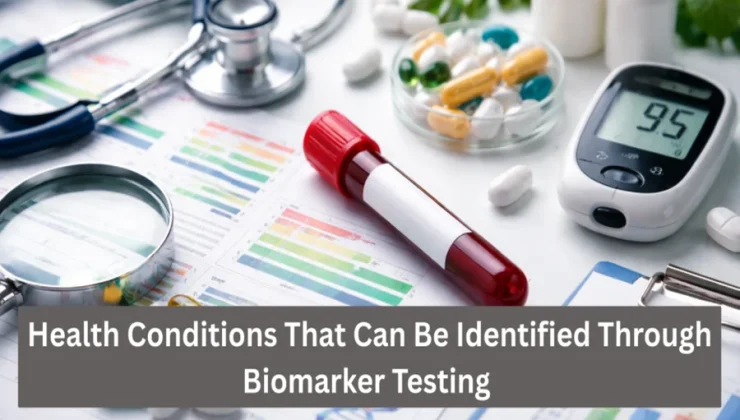
You might lead a healthy lifestyle and yet feel that something is not quite right. Energy levels rise and fall unpredictably, focus plummets, or progress stalls in spite of constant effort. Traditional health checkups often don’t offer too much insight, leaving you with more questions than answers. This discrepancy between how you feel and what standard results indicate can be frustrating.
What you really want is clarity. You want measurable signals that reflect how your body is functioning beneath the surface. Biomarkers provide that type of granularity by translating biological activity into data you can comprehend.
This article examines the health conditions that can be detected from biomarker testing and how this information helps you to make more informed decisions about your health.
1. Metabolic Health and Blood Sugar Regulation
Metabolic health reveals the efficiency with which your body is able to turn food into useful energy. Once this process is working well, the energy gets constant, and recovery becomes consistent. When it fails to do so, there are minor indications that start to emerge, including crashes, cravings, or loss of balance.
As highlighted in a recent article by high-performance longevity coach Nick urban, a comprehensive biomarker test offers deeper insight into metabolic health by revealing how blood sugar regulation, insulin response, and lipid metabolism function beneath the surface. These biological indicators show how your body uses energy at a cellular level, rather than relying on symptoms alone.
The early detection of metabolic inefficiencies will give you an idea of how daily routine habits influence internal equilibrium. This data-driven insight leads to more deliberate changes in the long term, as you can react to changes even before they start to develop into long-standing challenges.
2. Cardiovascular Health Indicators

Cardiovascular health is affected by many interconnected systems that are not always manifested in how you feel. Many people think of heart health problems as sudden, but biologically, there is a slow progression of these signs.
Biomarkers related to cholesterol transport, inflammation, and vascular function give early clues as to cardiovascular patterns. Instead of singling out one value, biomarker examination investigates the interaction of these signs, giving a wider look at the circulatory health.
With this information, you will be able to see how lifestyle choices affect cardiovascular stress. As a result, prevention is proactive and driven by trends that can be measured versus delayed reactionary responses.
3. Hormonal Balance and Endocrine Function
Hormones control energy production, metabolism, stress response, and recovery. In cases when hormonal systems become out of balance, the effects are often scattered and hard to trace back to a single cause.
Biomarker testing measures the indicators of thyroid activity, adrenal response, and overall endocrine function. These markers indicate whether or not the hormonal signals are being produced and regulated efficiently.
The symptoms become contextualized when these patterns become apparent. Energy, motivation, or metabolic alterations are less difficult to comprehend, as they are linked to quantifiable biological events in contrast to discrete experiences.
4. Inflammation and Immune Response

Inflammation is part of the body’s natural defense mechanism. However, if the inflammatory activity remains elevated over time, it can quietly impact the overall resiliency and recovery.
Biomarkers associated with immune response and inflammation help determine if the body is experiencing short-term stress or long-term internal strain. These indicators are important in detecting the response of the immune system to physical demands and environmental factors.
By becoming aware of inflammatory patterns at an early stage, you gain knowledge of how your sleep, stress, and recovery habits affect the balance of your immune system. This awareness helps to make more sustainable decisions that ensure long-term stability.
5. Nutrient Status and Cellular Support
You may have a balanced diet and still have low energy or slow recovery. In many cases, the problem is not intake, but the way that nutrients are absorbed and used.
Biomarker testing uses assessment of indicators related to the status of vitamins and minerals at the cellular level. These measurements determine if essential nutrients are reaching the tissues that depend on them.
Once nutrient imbalances are identified, it is easier to understand the effect they have on cognition, endurance, and recovery. As a result, nutritional strategies can be improved with a higher degree of accuracy, based on actual biological needs.
6. Biological Aging and Longevity Signals
Chronological age reflects how long you have lived, but it does not explain how well your body is functioning. Biomarkers provide insight into biological aging by measuring indicators tied to cellular health and metabolic efficiency.
These signals reveal how lifestyle factors influence aging-related processes over time. While they do not predict outcomes, they highlight trends that matter for long-term vitality.
By tracking these markers, you can evaluate how changes in routine affect internal function. This shifts the focus from reacting to age-related decline to actively supporting longevity through informed, measurable choices.
Data-Driven Health Decisions
Biomarker testing provides clarity where uncertainty often exists. By identifying metabolic imbalances, cardiovascular risk patterns, hormonal shifts, inflammation, nutrient deficiencies, and biological aging signals, these tests create a clearer picture of internal health.
When you understand what your biomarkers reveal, health decisions become intentional rather than reactive. Instead of guessing, you respond to real biological feedback. That shift allows you to move forward with confidence, guided by data that reflects how your body truly functions.