

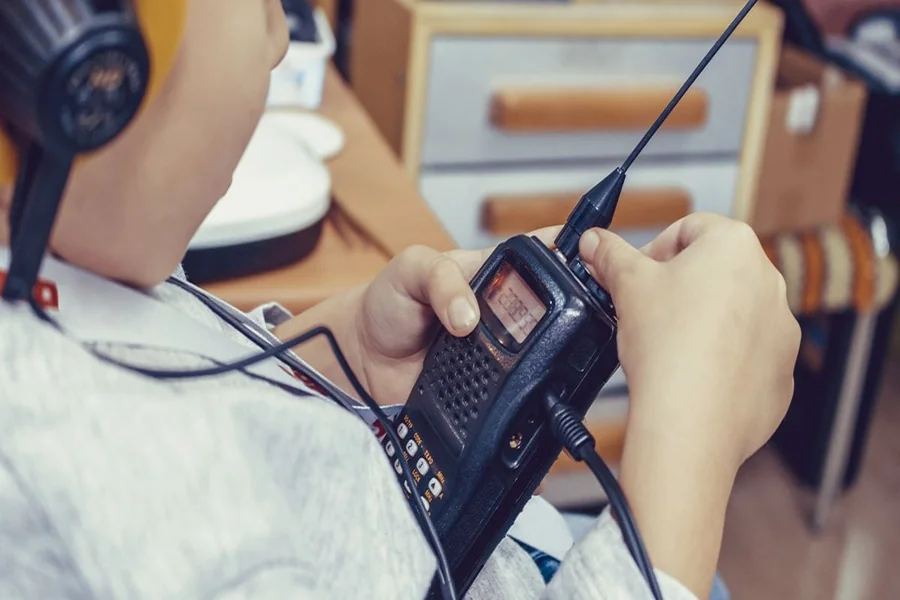
Today’s talk radio devices are designed for convenience, including conveniences for talk control. Fast response times are critical for many of the environments that utilize these devices for work and recreational purposes. Emergency responders rely on these devices to communicate with those in other groups and complete search and rescue missions quickly.
Having devices you can rely on for quick communication makes a big impact on the outcome of these missions. In this article, we discuss how talk radio controls and buttons are created for quick use. Buttons created for fast response and turnaround are critical components to today’s work and recreation services for group coordination and care.
Hands-free devices make it easier to communicate with those in a group without disrupting movement. Completing missions and working in complex environments are more easily handled with devices that incorporate simple control for quick usage. To learn more about the ways in which walkie-talkie devices are navigated through using efficient controls, read on and learn more.
Walkie-Talkie Control Designs
Today’s walkie-talkie devices are created for fast, one-touch use in order to speed up communication efforts and simplify the interface for daily use. Navigating a stressful environment is challenging enough. With walkie-talkie devices designed with controls that are user-friendly, the navigation process becomes easier to focus on in order to coordinate responses and care.
In addition to simple, one-touch designs, additional features like PTT (Push-to-Talk) buttons and intuitive menu formats make it easy for users to send messages without dealing with challenging interfaces, dialing, or bringing down efficiency in general. These creations are intended to provide walkie-talkie devices with what is needed for completing communication tasks and care within high-speed, high-stakes environments.
Function-Assigned Control Buttons
Buttons with specific functions, tactical designs, and volume controls, make communication more effective in difficult environments. Instant access is a central component of effective communication while using these walkie-talkie devices, rendering dedicated function buttons such as emergency call buttons, channel scans, and easy volume controls with ergonomic knobs essential aspects of user-friendly designs.
Easy Intuitive Layouts
Simple, easy-to-use designs are imperative to the layouts of walkie-talkie devices, as they make it easier for users to utilize their devices in high-stakes, fast-moving environments, i.e., construction, search and rescue missions, coordinated events, etc. Many of these layouts include rugged designs for easy, tactile engagement and resilience against harsh conditions.
Advanced, Efficiency-Focused Designs
There are also some models that include features like VOX, which allow for hands-free talk, eliminating the need for one-touch. With voice-activated transmitting, some models make it even easier to communicate, as the device relies on sensing speech for automatic transmission rather than engaging with a one-touch button.
Optimizing Your Communication Efficiency Efforts
The design choices used for walkie-talkie controls are made for efficient, fast responses. With these efforts, nearly instant communication becomes possible, and this is essential for working within industries that require real-time communication, rapid results, and coordination of large-scale services and events. Optimize the efficiency of your communications with a walkie-talkie designed for quick use.
*** This content is for entertainment purposes only and is not informational, professional, or educational advice.