

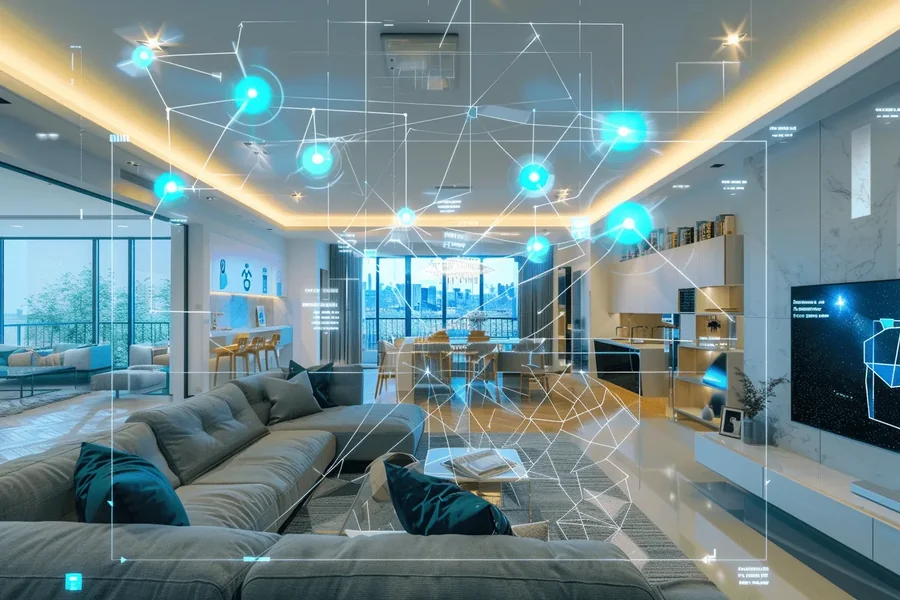
Homes are upgrading, thanks to new technology and smart devices. Today, it’s not just about having a beautiful space — it’s about having a home that understands your needs, makes life easier, and adapts to your lifestyle. Artificial intelligence (AI) is playing a big role in this change.
Smart homes are no longer a dream for the future — they are becoming part of everyday life. Technology is now helping people design interiors that are functional, comfortable, and tailored to their habits.
In this guide, we will look at the biggest trends in smart homes and AI-driven interior design.
AI-Powered Personalized Design
One of the most exciting trends in home design is AI-powered personalization. Instead of guessing what will look good in a room, AI tools can suggest layouts, colors, furniture, and décor that match your style, space, and lifestyle. These tools analyze your preferences, past choices, and even lifestyle patterns to create options that feel unique to you.
For example, some apps allow you to upload pictures of your home, and AI will rearrange furniture or recommend colors and textures that work best. This saves time and reduces the trial-and-error of traditional design. It also helps homeowners visualize ideas before making expensive purchases.
Marissa Burrett, Lead Design for DreamSofa, shares, “Personalized design goes beyond aesthetics. AI can suggest layouts that improve flow, storage, and comfort. It can even recommend furniture placement that makes small rooms feel larger or lighting that enhances mood.”
This trend is making interior design more accessible. You don’t have to be a professional or spend hours browsing magazines to create a home that feels just right. AI makes it faster, smarter, and more tailored to your life.
Voice-Controlled Smart Homes
Voice-controlled devices are becoming a central part of smart homes. AI-powered assistants, like smart speakers, can control lights, heating, appliances, and even entertainment systems with simple voice commands. This means you can adjust your home environment without getting up or using multiple apps.
These systems also learn your routines. For example, your smart assistant might start turning on lights or adjusting the thermostat at the time you usually wake up. Some devices can even make recommendations, like reminding you to close windows when the weather changes or adjusting energy use when you’re away.
Voice control adds convenience, especially for busy households or people with mobility challenges. It reduces the need to constantly touch switches, screens, or apps, which makes your home feel more seamless and modern.
This trend is growing quickly because it combines comfort, efficiency, and accessibility. With voice-controlled AI, your home becomes more intuitive and responsive to your daily life.
Smart Lighting Systems
Lighting sets the mood, improves focus, and even affects your energy levels. Smart lighting systems use AI to adjust color, brightness, and timing automatically based on your activities and the time of day.
For example, your lights can be bright and cool during work or study hours, warm and soft during the evening, and gradually dim as you go to sleep. Some systems respond to natural sunlight, adjusting artificial light to maintain a consistent feel throughout the day.
Smart lighting saves energy too. Motion sensors and timers turn off lights in empty rooms automatically, reducing wasted electricity. AI can also suggest the most efficient lighting setup for each room, combining style with functionality.
Smit Shah, E-commerce Manager at Apollo Tile, said, “Smart lighting isn’t just about convenience, it’s about creating spaces that are both functional and visually appealing. The right system enhances how a room is experienced while maximizing efficiency, just as thoughtful product choices elevate both comfort and style.”
This trend makes interiors feel more comfortable and personalized while lowering energy bills. Smart lighting transforms a simple room into a dynamic space that reacts to you and your lifestyle.
AI-Based Energy Management
Energy management is a major part of smart home design. AI-powered systems can monitor electricity use, track patterns, and make suggestions to reduce consumption. Smart thermostats are a common example—they learn your schedule and adjust heating or cooling to save energy without sacrificing comfort.
Some systems predict your usage and automatically shift energy-intensive tasks to off-peak hours, lowering bills and stress on the grid. When combined with solar panels or other renewable energy sources, AI can store energy for later use, making your home more sustainable.
AI energy management also helps identify appliances that use more energy than necessary, giving homeowners options to upgrade or adjust. Over time, these systems reduce waste, lower costs, and minimize environmental impact.
With AI, energy management is no longer manual. Your home works in the background to optimize efficiency, making it a smarter, greener space without extra effort.
Intelligent Furniture and Modular Design
Furniture is becoming smarter too. AI and technology are now being used to create furniture that adapts to your needs. For example, some desks can adjust height automatically based on your routine, and beds can monitor sleep quality. Modular furniture is another trend, allowing rooms to be reconfigured easily as needs change.
AI can even suggest optimal layouts for furniture to maximize space, improve traffic flow, and make rooms feel larger. In small apartments, this is especially helpful because every inch counts.
This approach combines style, functionality, and flexibility. Homeowners can adapt their space for work, relaxation, or entertainment without buying new furniture or making permanent changes.
Virtual and Augmented Reality in Interior Design
Virual reality (VR) and augmented reality (AR) are transforming how we plan and visualize interior design. AI-powered VR/AR tools allow homeowners to “walk through” a room before making any changes. You can see furniture, colors, and layouts in real time, which reduces mistakes and ensures decisions feel right.
These tools can simulate lighting, space, and even textures, giving you a clear sense of how your home will look after renovation. Some apps can also make suggestions based on your style and previous choices, combining VR/AR with AI for personalized design.
VR and AR save time, reduce costs, and make design more accessible. Instead of buying furniture or paint blindly, you can see the result first. This trend makes planning renovations smarter, faster, and more reliable, especially for busy homeowners.
Wrap Up
The future of homes is smart, connected, and personal. AI and technology are changing the way we design, live, and interact with our spaces. From personalized layouts and smart lighting to energy management, modular furniture, and advanced security, these trends make our homes more comfortable, efficient, and safer.
Smart homes are not just for tech experts — they are becoming accessible to everyone. Even small updates, like voice-controlled devices or energy-saving systems, can make a big difference. The key is using technology to simplify life, save energy, and create a home that fits your needs.