

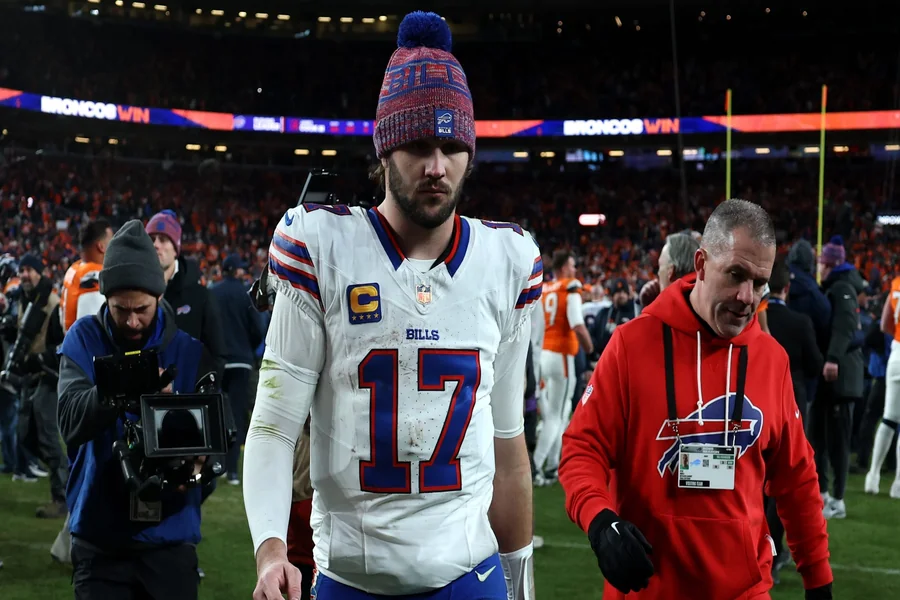
The Buffalo Bills’ thrilling overtime loss to the Denver Broncos in late January 2026 stirred major controversy, with officiating drawing intense criticism from fans, analysts and even former players. What should have been a decisive postseason moment instead became a flashpoint of debate over missed calls, rule interpretations and the role of referees in determining the outcome of high-stakes NFL games. The aftermath revealed deep frustration among Bills supporters, who believe Buffalo was hindered by pivotal officiating errors that changed the course of the game.
Buffalo traveled to Denver for a key AFC matchup that was tightly contested throughout regulation and ultimately extended into overtime. The Broncos prevailed 24-21, with the winning play coming in overtime. Yet the final score was overshadowed by several controversial referee decisions that Bills fans and commentators argue had a direct impact on possession, field position and momentum in crucial moments.
Bills quarterback Josh Allen played well, mixing his accurate deep ball with effective pocket management, while Denver quarterback Bo Nix and his offense consistently put pressure on Buffalo’s defense. The game’s back-and-forth nature made it all the more dramatic when officiating became a central storyline rather than just the players’ on-field performances.
The Controversial Calls That Sparked Outrage?
Questionable Pass Interference Non-Call
One of the most heated complaints centered on a play in the second half where a Bills receiver was clearly impeded by a Broncos defensive back on a deep ball. Many analysts and fans noted that the contact occurred well before the ball arrived, preventing a potentially explosive gain for Buffalo.
Replays suggested that the defender’s arm and hand made early contact that significantly restricted the receiver’s route and separation. Yet, officiating crews did not throw a flag, leaving Bills supporters convinced that a major penalty was missed. This non-call became a rallying point among fans who felt the league’s officiating inconsistency was on full display.
Spotting the Ball Before a Review
Later in the fourth quarter, Buffalo appeared to have a short gain that would have positioned them deep in Denver territory. However, officials marked the ball further back than many expected, prompting Bills sideline personnel to throw the challenge flag.
The subsequent review upheld the original spot, a decision that angered many observers. The controversy stemmed from the perception that the replay review did not align with the clear evidence on the broadcast replays, which seemed to show forward progress closer to the first mark. Critics argued that this weakened Buffalo’s field position and ultimately limited scoring opportunities in a game where every yard mattered.
Overtime Coin Toss Confusion
Even the overtime coin toss created debate. Bills fans pointed to what they believed was a miscommunication between the referee and the team captain. The implication was not necessarily a huge competitive advantage, but the optics of confusion in such a critical moment fueled frustration and social media memes about NFL procedural clarity.
While the league defended the exchange as following protocol, many Bills supporters seized on the moment as another example of officials unnecessarily complicating an already intense environment.
Fan Reaction and Social Media Backlash
As soon as the final whistle blew, social media lit up with criticism. Bills Mafia — one of the NFL’s most passionate and vocal fan bases — quickly took to X (formerly Twitter), Instagram and fan message boards to express outrage, frustration and disbelief.
Common themes in fan posts included:
- Claims that officiating directly altered the competitive fairness of the game.
- Calls for NFL officiating accountability and greater transparency in rule application.
- Comparisons to previous high-profile controversial calls in the NFL.
- Humor and memes highlighting the frustration with the missed pass interference call and the ball spot review.
Some fans even compared the officiating to past playoff games where blown calls had championship ramifications, arguing that consistency matters most when the stakes are highest.
What did Analysts and Player Commentary think?
Several sports analysts and former NFL players weighed in as well. While some acknowledged the difficulty of real-time officiating, others pointed out that the Bills had legitimate grievances that warranted closer scrutiny from officials and the league office.
Former players with broadcasting roles discussed how officials are expected to make split-second decisions in a highly complex and fast-moving game. Yet they also acknowledged that when replay evidence appears to contradict an on-field call, it undermines confidence in the process.
Some commentators emphasized that the Bills’ loss should not be reduced entirely to officiating, noting strong plays by the Broncos and key execution moments that also determined the outcome. Still, the officiating spotlight was impossible to ignore given the timing and context of the disputed plays.
NFL Response and Officiating Transparency
In the immediate aftermath, league officials released a statement acknowledging that officiating is a challenging profession and that crews strive for consistency and accuracy. The NFL often emphasizes the use of replay and review protocols as safeguards but did not provide specific clarification on the disputed decisions in this particular game.
Bills fans and some broadcast analysts have called for more detailed explanations from the league office, particularly with slower replay reviews shown on television. They argue that transparency and clear communication about what the visual evidence shows versus what the ruling on the field was could help ease fan frustration and reduce conspiracy theories about bias or incompetence.
What’s Next for the Bills?
The loss had immediate playoff and Super Bowl implications, which can be found here. Buffalo’s defeat in overtime not only knocked them out of contention but also affected seeding and potential matchups for other teams. The Broncos benefited from the victory by securing a higher playoff seed, which could translate into home-field advantage — a pivotal factor in late January and early February football when weather and fan noise can be decisive.
Fans within Buffalo’s fan base are already looking ahead to the offseason with questions about roster changes, referee training improvements and how future games might avoid similar situations. Some have even called for expanded use of coaching reviews and longer replay windows to allow more detailed examination of close calls.
Buffalo’s overtime loss to Denver will be remembered not just for the final score but for the controversy that surrounded it. When high stakes, expert talent and passionate fan bases collide, officiating questions only magnify the emotional impact.
While the Broncos advance and Bills supporters must reckon with the result, the larger conversation about NFL officiating consistency, replay interpretation and the role of human judgment in the game is likely to continue well beyond this matchup. The season was thrilling and unpredictable, but it also reminded fans that in football — as in all sports — fairness and perfection are elusive goals that spark intense debate and lasting memories.